
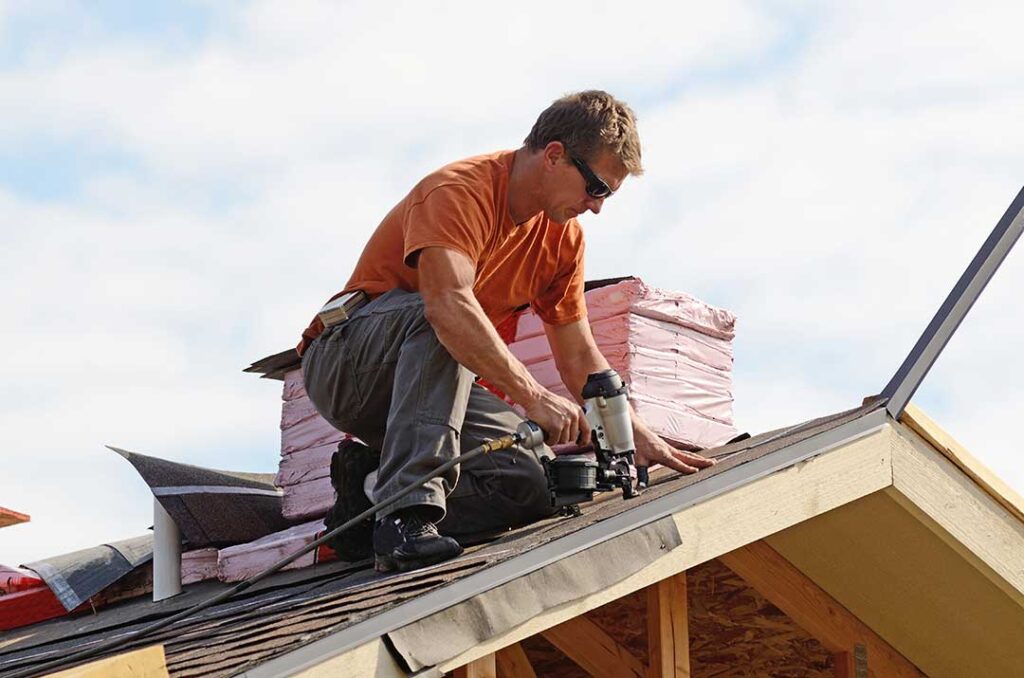
Why roof fire ratings matter in Marcellus, NY
A roof fire rating describes how a roof covering or complete roof assembly performs when exposed to fire. The rating helps indicate how well the roof resists ignition, flame spread, penetration, and burning brands carried by wind.
For households in Marcellus, roof fire performance is relevant even though the community is not generally associated with the same wildfire conditions found in dry western regions. Roofs can still be exposed to chimney sparks, nearby structure fires, lightning, electrical faults, outdoor burning, and windblown embers. Seasonal dryness, fallen leaves, and debris collected in roof valleys or gutters can also add combustible material around the building.
A fire rating is one part of roof safety. It does not mean a roof is fireproof or that a fire cannot enter through vents, eaves, windows, walls, or attached structures.
What do Class A, Class B, and Class C mean?
Class A provides the highest level of roof-covering fire performance recognized by the standard classification system. Class B provides moderate protection, while Class C provides light protection. An unrated covering has not been shown to meet one of these classifications under the applicable test method. ([docinfofiles.nfpa.org](https://docinfofiles.nfpa.org/files/AboutTheCodes/1144/1144_A2017_WRP-AAA_FDmeetingagenda_7-15.pdf?utm_source=openai))
The classifications are generally based on testing under standards such as ASTM E108 or UL 790. Testing evaluates conditions including:
- Flame spread across the roof surface
- Whether flames penetrate through the covering
- Whether the covering produces burning material or brands
- Whether the roof covering slips or exposes the deck
- The severity of the fire exposure
In practical terms:
- Class A: Designed to resist severe fire exposure
- Class B: Designed to resist moderate fire exposure
- Class C: Designed to resist light fire exposure
- Unrated: No listed fire classification for the installed product or assembly
The rating is not a ranking of how long a roof will withstand a building fire. It is a test classification for fire exposure to the roof system.
Is a Class A roof always Class A by itself?
No. Some roof coverings receive their classification only when installed as part of a specific assembly.
A roof assembly may include the visible roof covering, underlayment, fasteners, sheathing, insulation, and the supporting deck. The same shingles, panels, or tiles may have different approved classifications depending on what is installed beneath them and how the components are fastened.
For example, a product may be listed as “Class A by assembly.” That means the rating depends on additional materials or a particular installation method. Replacing the underlayment, changing the roof deck, using different fasteners, or installing the product over an unapproved surface may affect whether the completed roof still matches the tested assembly. ([nfpa.org](https://www.nfpa.org/-/media/Project/Storefront/Catalog/Files/Firewise/Fact-sheets/FirewiseFactSheetsRoofingMaterials.pdf?hash=DBD05958A93D90AB5C6212ABDBFE4C64&rev=c07cda5c030e4189a58460e8412bd0ab&utm_source=openai))
This is why a product label alone does not always answer the fire-rating question. The installation instructions and listing should be reviewed as a complete system.
Which roofing materials commonly have strong fire performance?
Many fiberglass-reinforced asphalt shingles are available in Class A assemblies. Concrete tile, clay tile, slate, and certain metal roof systems can also qualify for Class A performance, but the exact result depends on the deck, underlayment, fastening method, slope, and listing.
A material’s name does not automatically establish its rating. For instance, “metal roof” describes a material category, not one universal fire classification. Some metal systems are tested over combustible decking, while others depend on a noncombustible deck or a particular underlayment.
Wood shakes and shingles require especially careful attention. Some treated products may qualify for a fire classification when installed in an approved assembly, but untreated wood coverings generally provide less protection than a listed Class A system. A roof that appears sound from the ground may still have an outdated or undocumented assembly.
Does the roof deck affect the rating?
Yes. The roof deck can be a major part of the tested assembly.
Many homes use wood structural panels beneath the roof covering. A Class A roof covering installed over one type of deck may require a specific underlayment or additional fire-resistant layer. Other assemblies may achieve Class A performance through noncombustible materials or a tested combination of deck and covering.
The visible surface is therefore only part of the answer. During reroofing, it is useful to document:
- The roof-covering product and classification
- The underlayment type
- The deck material
- The approved installation method
- Any special requirements for low-slope sections, attached garages, or roof-mounted equipment
This information can be difficult to determine after materials are covered, so product packaging, installation instructions, and permit records should be retained when available.
What does New York’s building code require?
New York’s Uniform Code establishes minimum construction standards throughout the state outside the separately regulated jurisdiction identified in state law. The state adopted the 2025 Uniform Code, which became fully effective on December 31, 2025. ([dos.ny.gov](https://dos.ny.gov/division-building-standards-and-codes-frequently-asked-questions?utm_source=openai))
For many residential roof replacements, the applicable requirements are found in the residential code provisions addressing roof coverings and fire classification. Larger or differently classified buildings may be governed by building-code provisions that set minimum roof classifications according to the type of construction.
The required classification can depend on factors such as:
- Building construction type
- Occupancy and use
- Roof assembly
- Fire-separation distance
- Whether the work is new construction, repair, or reroofing
- Whether a local requirement is more restrictive
A roof replacement should not be assumed to qualify simply because the previous roof was accepted. Current code requirements, existing conditions, and the scope of work may all matter. The state Department of State explains that building permits are generally required for work covered by the Uniform Code, with specific rules and exceptions. ([dos.ny.gov](https://dos.ny.gov/division-building-standards-and-codes-frequently-asked-questions?utm_source=openai))
Does a fire rating protect against chimney sparks or wildfire embers?
It can improve resistance, but it does not eliminate the risk.
Windblown embers can collect in gutters, roof valleys, behind siding, under loose flashing, or around vents. A Class A roof covering is intended to perform better under severe fire exposure, but nearby combustible debris can still ignite and carry fire to other parts of the home.
For local homes, practical maintenance includes:
- Removing leaves and dry debris from gutters and roof valleys
- Keeping branches from rubbing against or overhanging the roof
- Checking that chimney components and spark-control features are maintained
- Keeping combustible storage away from exterior walls and attached garages
- Inspecting damaged shingles, panels, ridge caps, and flashing after severe weather
- Ensuring roof vents and openings are properly installed and not obstructed
These steps support fire resistance regardless of roof material.
How can a homeowner verify a roof’s fire rating?
Start with the product label, invoice, installation instructions, or manufacturer’s technical documentation. Look for wording such as “Class A,” “Class B,” “Class C,” or “classified by assembly.” The documentation should identify the installation conditions required to achieve the rating.
If records are missing, a visual inspection may identify the roof covering but usually cannot confirm the complete fire classification. The underlayment, deck, fasteners, and concealed layers may not be visible. Permit records or code-enforcement documentation may help establish what was installed, particularly after a recent reroofing project.
The most useful question is not simply, “What material is on the roof?” It is: “What fire classification applies to the complete roof assembly as installed?”
